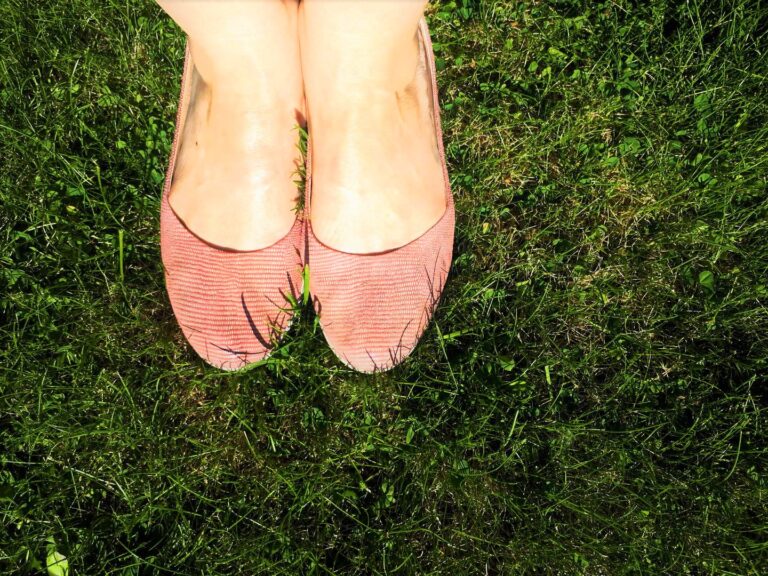
I have this pair of favourite shoes. But when I wear them, I get a really sore bit under my foot. It hurts. It distracts me, makes me hobble and want to take my shoes off. It’s annoying because I really want to wear them. I do love them. My friend also has a pair of the same shoes and they don’t hurt her at all, in fact she says they are comfiest shoes she’s ever worn. But people do tell me they look really good.
So… they look good and they are comfy for my friend, so it must just be me, so I’ll keep wearing them – and limping. Or more likely, I guess I’ll end up ditching them.
If they look good, they must fit perfectly. Right? Tell that to anyone who is breastfeeding who is experiencing the frustration, disappointment and pain of breastfeeding when it is hurting. And who finds that when she asks for help, she hears ‘Well it looks ok’ or ‘The latch looks good’. What does that say to her?
That she’s making a fuss?
That she’s just doing it wrong?
That maybe she’s just ‘one of those women’ who can’t breastfeed?
That breastfeeding is supposed to hurt, so hush up and get on with it?
That there is no point in asking for any more help if this is as good as it gets?
I spend a lot of time with mothers who are finding breastfeeding painful, they have damaged nipples, or their baby is not gaining weight. Breastfeeding isn’t going as smoothly as they hoped. And who say that when they asked for help, they were told that “the latch looks good”.
It’s really not unusual for someone to say they are finding it a little bit sore, but ‘not too bad’ and then she pulls up her top to show a nipple that makes me wince. But she’s been told the latch looks good. Where does that leave her?
There is only one person who knows if the latch is good. And that’s YOU. Because only you know how it feels. Only you can say if your nipples are comfortable while your baby feeds, and after they have finished.
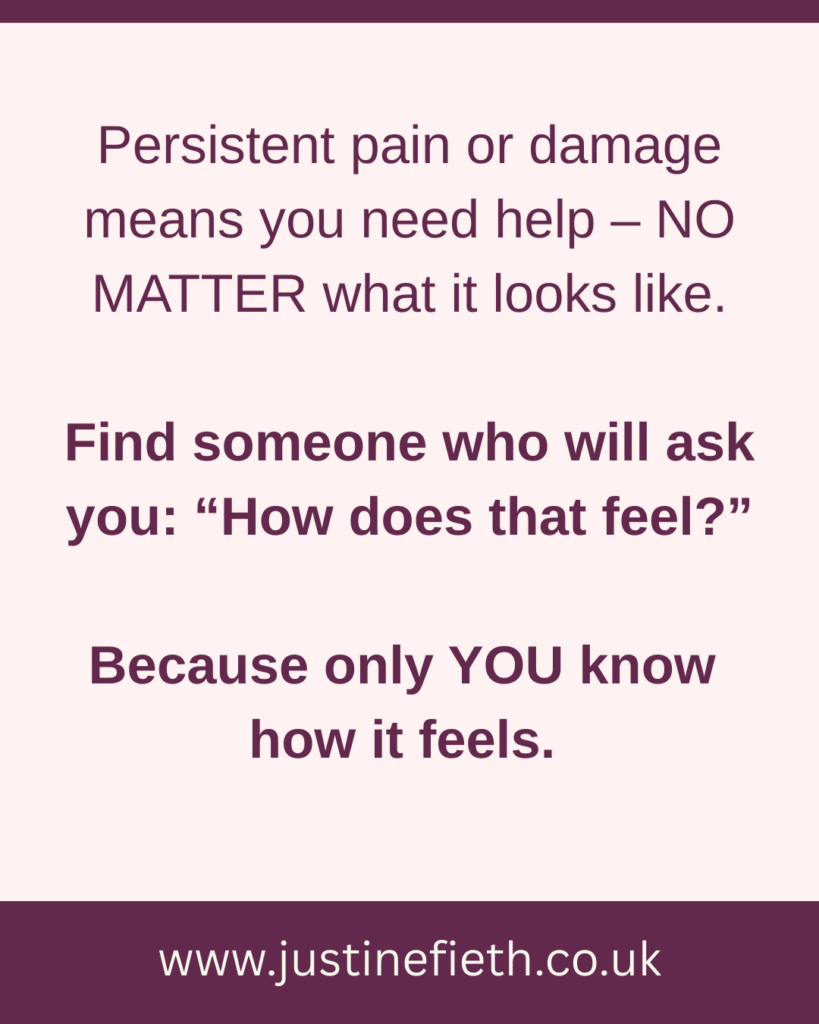
Yes, in the early few days, it can take a little while to finesse a completely comfortable latch while you both learn to fit together and master the art. But pain that makes you hold your breath and hunch your shoulders, or that causes cracks and blisters on your nipples – that’s never OK. Persistent pain and damage means you need help – NO MATTER what the latch looks like.
At its simplest, breastfeeding is going well if it is comfortable for you, and your baby is getting milk efficiently. If either of those aren’t happening – then no matter what the latch looks like, you need skilled breastfeeding support. You need to hear “How does that feel for you?” rather than “I think that latch looks good.” The support needs to be about you. You need to know you are being heard and your experience valued, rather than your pain and discomfort being dismissed.
If you hear ‘the latch looks good’ but it hurts or your baby is struggling, perhaps what the helper is saying is ‘I don’t know how to help’. So that means you need to ask someone else, or ask them to find you more support. Speak up. Don’t suffer in silence because you think it must be you, or because you are wondering if maybe that’s just how breastfeeding is meant to be. If it’s hurting, get skilled help and support and see how you can move to a place where you are enjoying breastfeeding and your baby is getting breastmilk effectively.
And WHO you get help from can make all the difference: not everyone is equally trained, experienced and practised to the same level of breastfeeding support and knowledge – and it’s possible you might not know the level of ‘expertise’ you are getting. You can check the different ‘levels’ here and make sure you are getting what you need.
Oh by the way – my shoes.. turns out there was a stone in one of them. I’ve taken it out now and they are so much more comfortable now. AND they look good. I love them.
(This article originally appeared on the Cambridge Breastfeeding Alliance website in 2019 but I’ve updated September 2025.. depressing isn’t it, that not much has changed)
*https://lcgb.org/why-ibclc/whos-who-in-breastfeeding-support-and-lactation-in-the-uk/